
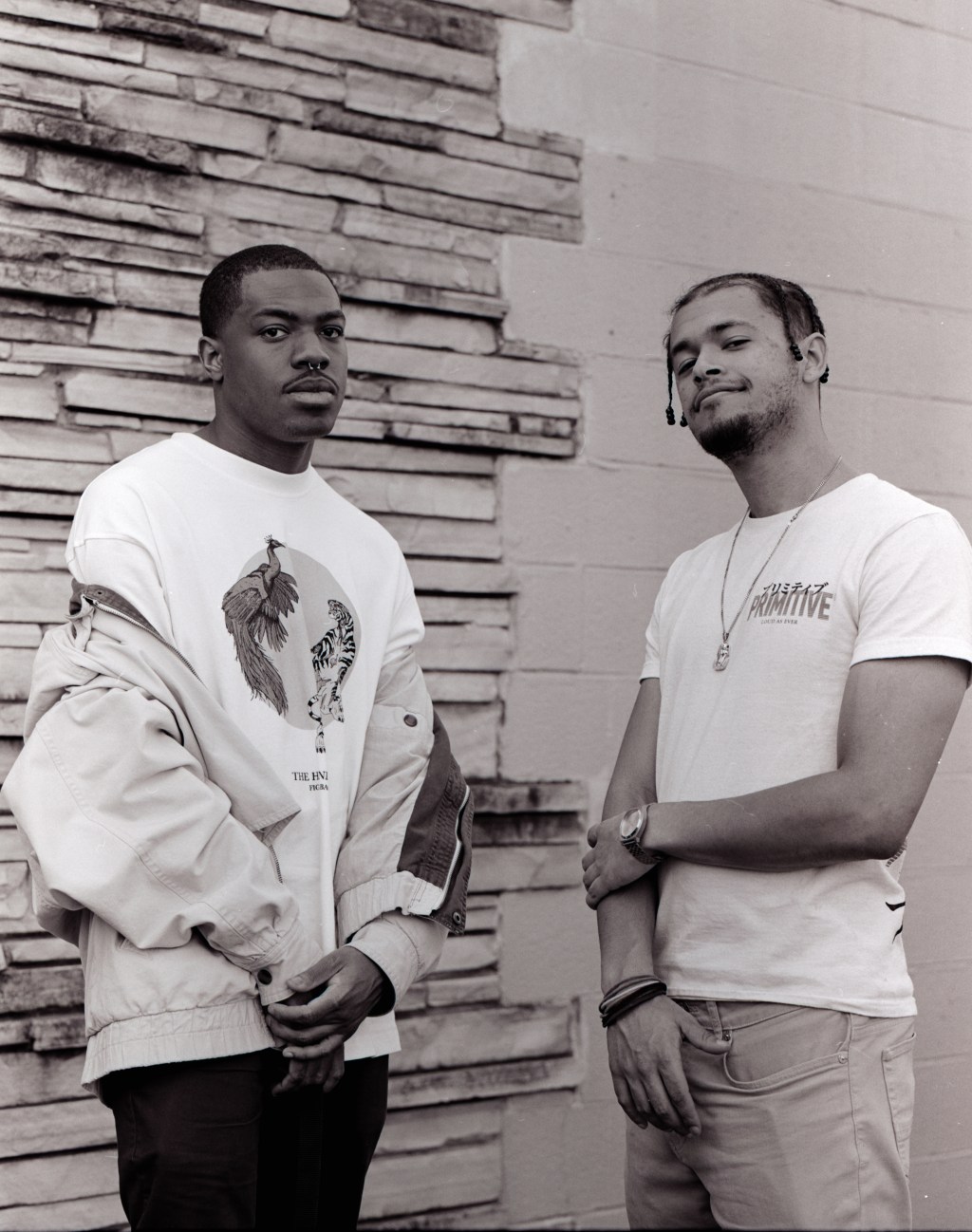
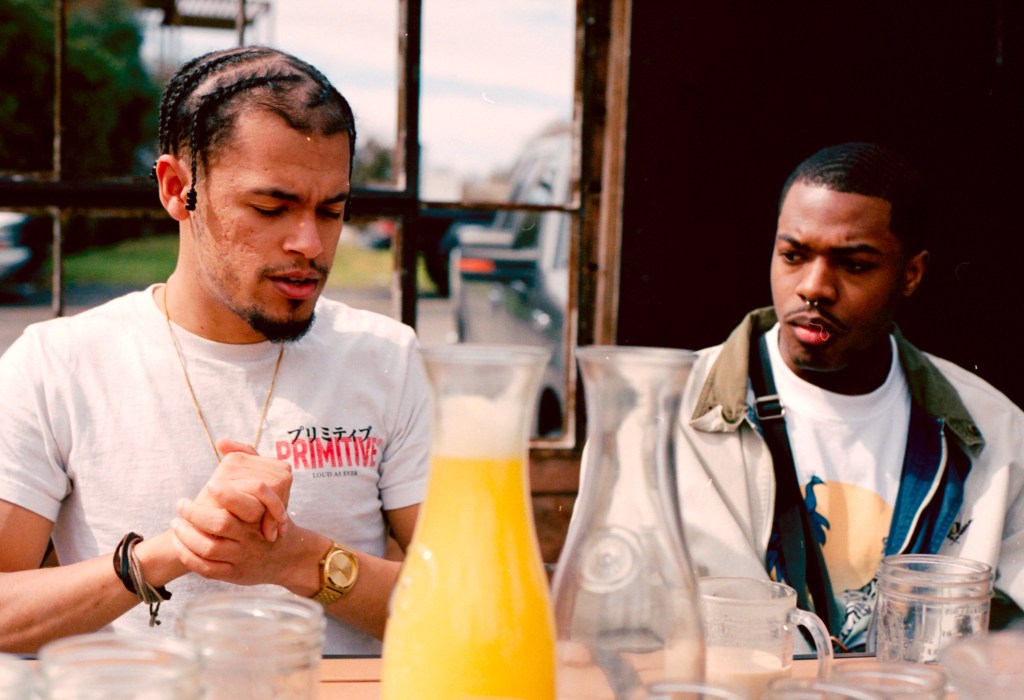
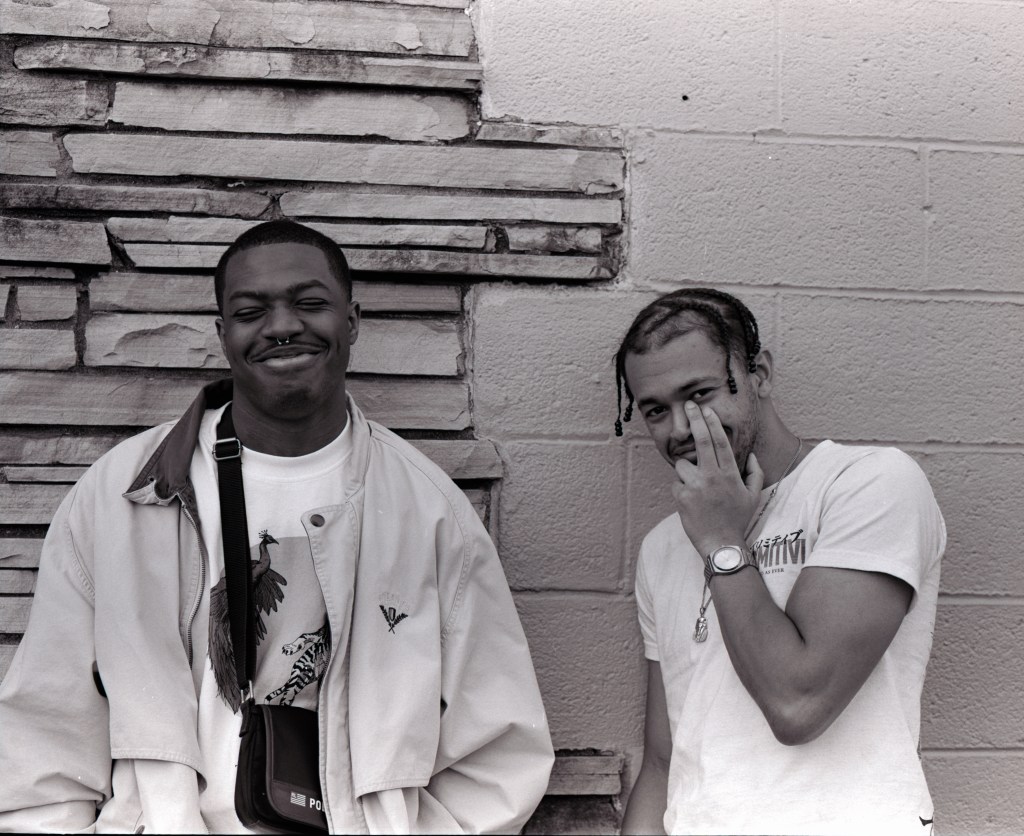
Fngr Food had an opportunity to sit down with two Dallas natives doing incredible things within their city. Xavier, who is also known as the rapper and producer, “Graham Malice“, as well as Adrian, the multi faceted Electronic producer who goes by “Capshun,” both shared their humble beginnings with us over a nice meal. These gentleman are two thirds of the small but mighty team behind ‘The Waiting List‘. The Waiting List is based on sessions which presently are exclusively available to Dallas artists looking to make great music alongside others within their community. The team provides a studio space for artists to create and helps handle all their production and recording needs, amongst other things. As The Waiting List grows, we were honored to get more information from both Graham Malice and Capshun as individuals, along with how their worlds ultimately collided in order to create a future as leaders who are destined to set a new standard in terms of collaboration and community building.
This is not only an interview but the story behind the incredible dream that these artists share. Please set aside ample time to read the following article to better understand the origins of something incredible making an impact in the Dallas music scene, and someday, the world.
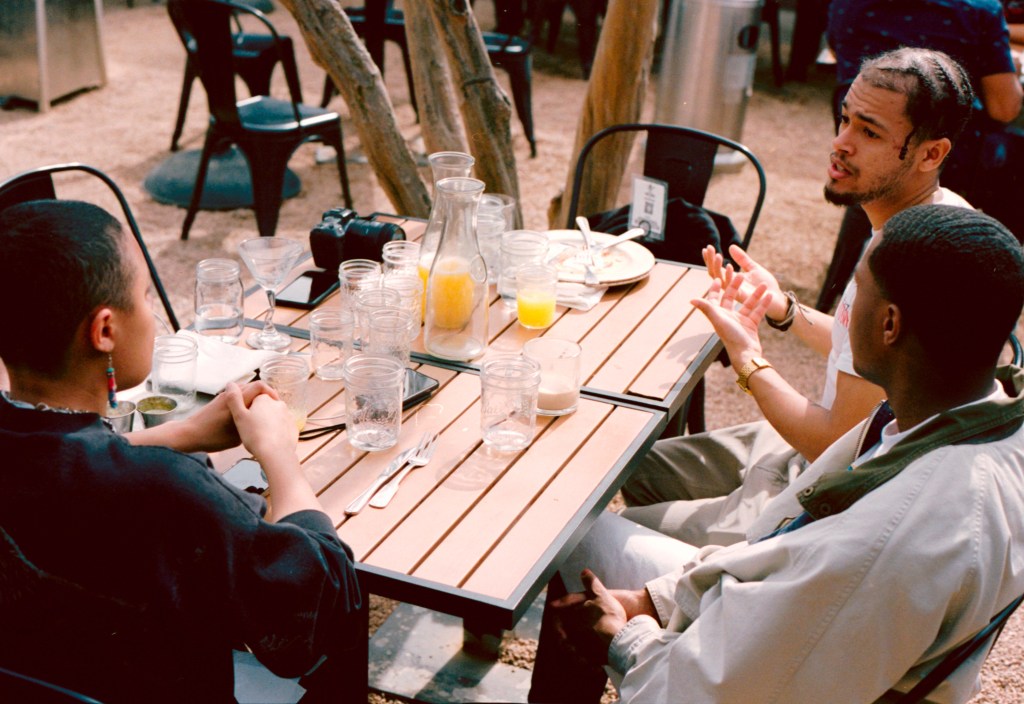
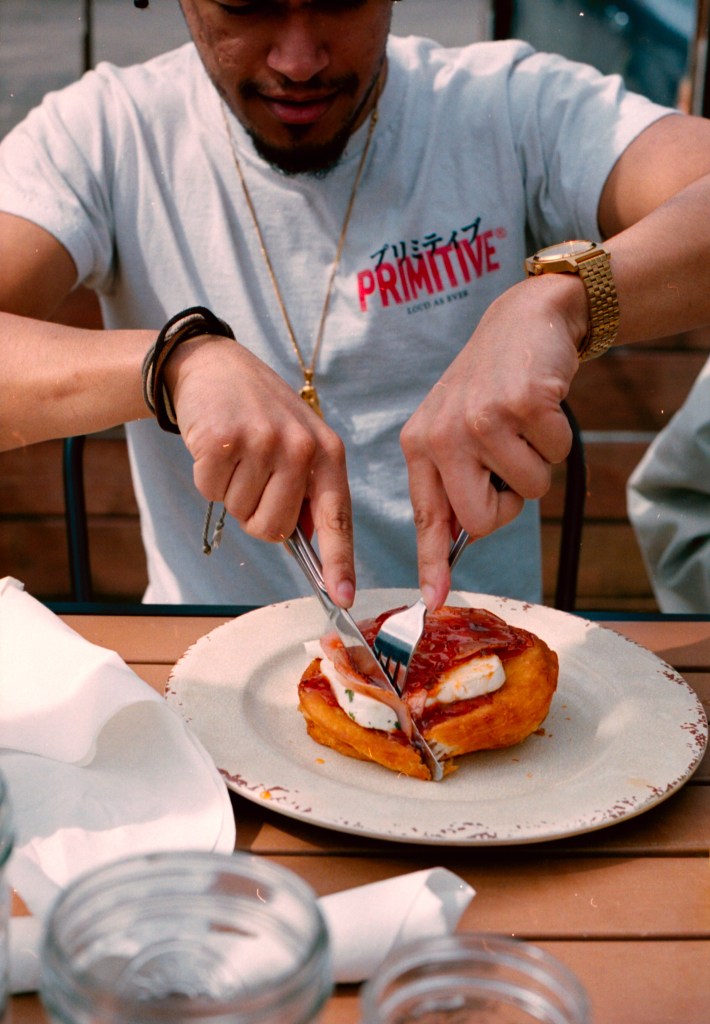
We met with The Waiting List team at the Gourdough’s Donuts Public House location on a beautiful Sunday afternoon. Graham and Capshun had just got into Austin from Dallas late Friday night and had visited the Gourdough’s food truck location the day before the interview. Both knew exactly what they wanted as they sat down, the confection known as “Porkeys”. The dish consists of a soft cream cheese spread with grilled Canadian bacon and jalapeño jelly; all placed neatly atop a fried donut. While waiting for their food, the interview commenced, starting with Graham Malice…
Part 1: Graham Malice
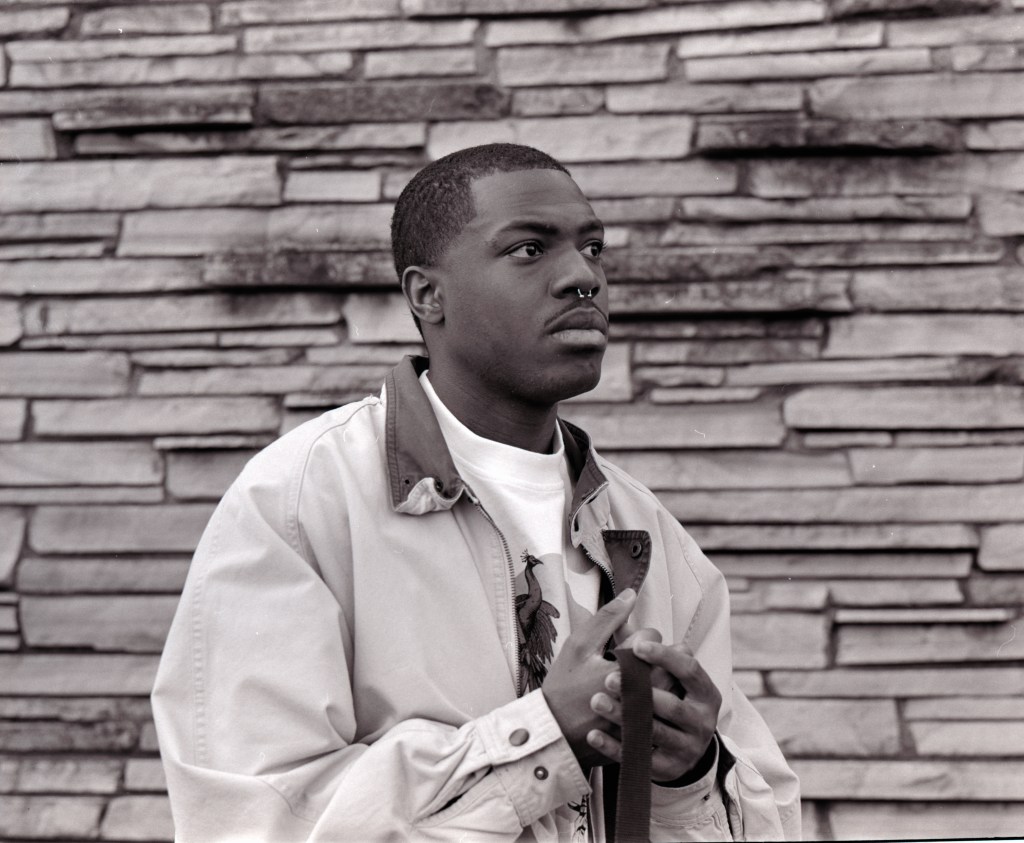
FF: You’re originally from California and you moved to Dallas in 2011. What brought you here to Texas?
GM: My mom. [It’s] cheaper living and I was on my last leg as far as school goes. I was a bad ass kid in High School. It was time for a change of scenery.
FF: Did you go to college, too?
GM: Yeah, I took Community College courses. Really, I only went for writing so I could become a better writer.
FF: While you were in school, you began rapping with some friends, right? Was there a name for that group?
GM: Not a good one! [laughs] It was 2011 when we started freestyling. We would [freestyle] at pep rallies and stuff like that. Around that time, you had GOLFWANG popping up and the Odd Future movement. There was also Black Hippy with Kendrick [Lamar], Schoolboy [Q] and etc.
FF: Was that the style of rap for your group?
GM: Yeah, it was a lot of shit. Everyone was doing stuff based on who they liked at the time. It was really a mess, but that was what sort of nurtured the passion for [rap.] We spent a lot of time rapping a lot of really bad raps in our Audio Tech class.
FF: Can you tell me the name of the group?
GM: It was a really long acronym and I don’t remember.
[Capshun chimes in]
C: It was DELTA.
GM: Oh yeah, that’s right. I don’t remember what it stood for
FF: You two went to school together?
GM: Yeah!
[FNGR FOOD To Capshun]
FF: Okay, so Capshun, you started producing around the same time [Graham Malice] moved here?
C: Yeah, I started rapping at first. We won’t talk about that too much. But yeah, I started producing shortly after [in 2011]. The group was missing a producer, so I was like: “Yeah, I’ma jump in that.”
FF: What was the program you used when you first started producing?
C: I was actually using this website. It was called Audiotool. It was a piece of shit [laughs] but it was fun to produce in.
FF: I saw that you started producing in 2011 and I knew Graham moved [to Dallas] around that time, as well. I was wondering if there was a correlation with that. It’s really cool you two went to the same school.
[FNGR FOOD to Graham Malice]
FF: So how did you two find each other [at school]?
GM: Like I said, I was really a bad ass kid in school and being here was my last leg of getting through school without having to go through some sort of alternative program. I was trying to mind my business and trying not to get into anything and being in Plano [TX], it’s a very suburban community, versus what I was used to. One day, an associate of mine from one of my classes was like : “Yo, come to lunch with us!” and I wasn’t really trying to get into anything but ended up meeting a large group of people. That’s how I met Adrian. We initially weren’t super close, but we’d always talked.
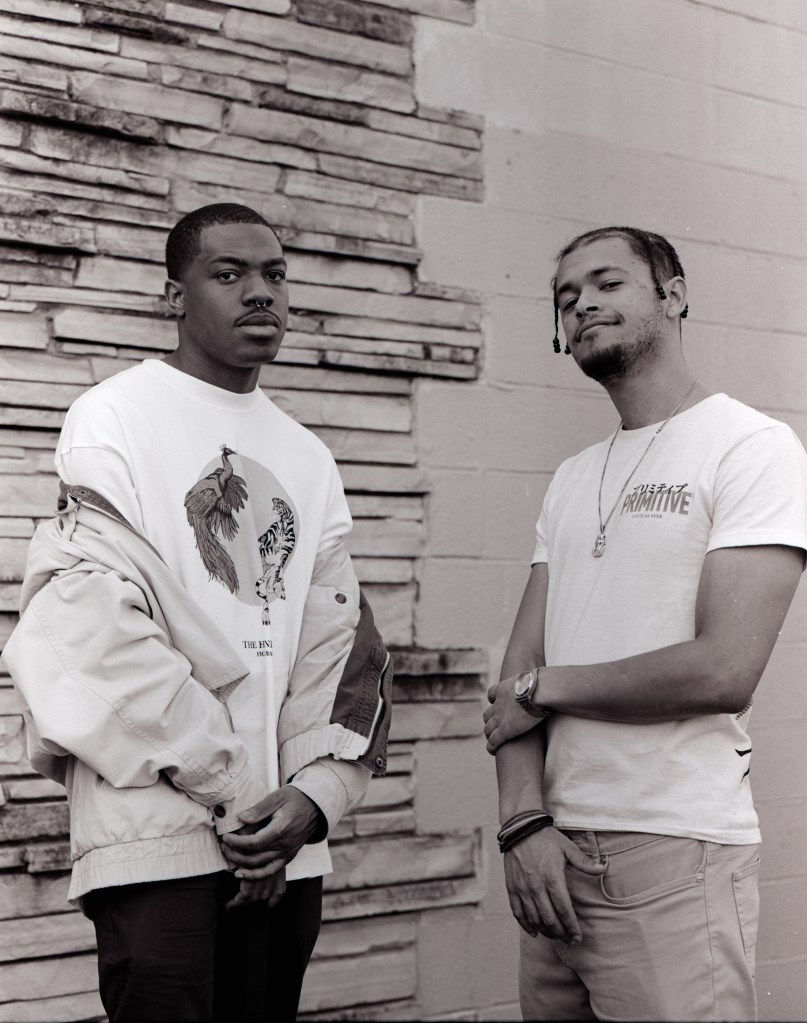
FF: The culture in Dallas seems heavily influenced by the underground scene. Were you in that at all? Or do you consider yourself to be underground currently?
GM: Definitely. Around 2014 is where I started establishing an identity for myself in the city. But, even before then, we were going to clubs we weren’t supposed to. Every weekend, we were going somewhere that we shouldn’t have been. So it was like, we were trying to figure out how the city moved and figuring out what was cool and what worked. That was the way I figured out what the culture was. You know, like, what Boogie music was and South Dallas Swag. When 2014 came, I was putting in my ten thousand hours, you know. I was like : “I’m gonna be somebody.” It was me shaking hands and kissing babies, you know? Trying to put my identity in the scene.
FF: Do you feel like you’re inspired by that underground movement?
GM: One hundred percent. I actually don’t think that I would be rapping if I didn’t come here. Being in Dallas– it’s a super unique place. It’s a unique community that is really forged in fire. We talk about all these cities in Texas. We all know how big Houston is. We all know Houston makes superstars. I listen to a lot of artists and my playlist is just all Dallas artists. Really, to me, the best rappers, singers and producers come from [Dallas.] Moving there really inspired me to start rapping and to start producing.
FF: There’s a lot of artists that I’ve seen who have come [to Austin] to perform. I’ve gone to underground shows and I thought to myself: “I didn’t realize how much talent we had in our underground scene” and then I’d go talk to the artist after the show and they would tell me they were from Dallas. That’s actually how I met [Cush With a C].
GM: Yeah, he’s dope!
FF: Speaking of underground, you won the Audius Underground Rap Competition a year ago. Tell me about that.
GM: Adrian’s mentor works really closely with Audius. So, he put us on early. At the time, we were grinding trying to put our music up anywhere and everywhere. We were really trying to figure out where we could go and where this community could live. We started dabbling into Audius a little bit. We uploaded a few songs, got into the Discord and started chopping it up with people. We got on the Reddit and they didn’t have a lot of rappers on the platform at the time. It was a new platform and was based on Electronic Music and not much Rap. This guy Alex I was working with at the time was reaching out to me a lot. He was trying to throw other genres on the platform. I submitted the song “Perrier“, which was a song that I did with Dino Noir and Capshun, and it won. I got a lot of support from that community.
FF: Now that you’ve been making music and you’ve become even further submerged in Dallas culture and the scene there, you’ve now ventured out into Austin. You actually performed in February of 2020 and Capshun DJ’d for you. Tell me about that.
GM: Yeah, so that was the ESCAPISM event. It was lit. It was actually the second ESCAPISM I performed at. I also performed at the first event, which was in Dallas. There was a lot of support out here [in Austin.] I didn’t know what kind of reception I would get.
FF: Was that your first performance [in Austin?]
GM: No, I performed at [SXSW] in 2016.
FF: How was the energy of the crowd [in Austin?] versus at home in Dallas?
GM: It was different but it was really fun. It was really welcoming. When you’re in Dallas, I don’t want to say it’s a form of competitiveness but there’s a bite to it. You really have to show out a little. I think [in Austin,] it’s really open and fun.
FF: You have a lot of integrity with your work and you make things with actual intention behind it. You’re also very community-orientated. Can you explain that importance in your work, especially with how you interact with your community?
GM: I think that it goes towards a bigger conversation when you talk about art and artists in general. It’s up to the interpretation. If I put a painting on a tree in the middle of the woods when no one is there and there’s no one that can interpret what that is, that genuinely isn’t art, in my opinion. Until you have an audience to take that in and regurgitate it, it’s nothing until that happens. That’s what makes it subjective. Really, this is why I started rapping in the first place. I didn’t feel like I was getting representation through any medium that I saw. There was nothing I identified with when it came to art, which was an issue for me. The objectivity was that I needed to make something that represented me best. I needed it to be so that when peopled listened, that they would get the right message from me. I think through that is what I built my mannerisms on and how I worked.
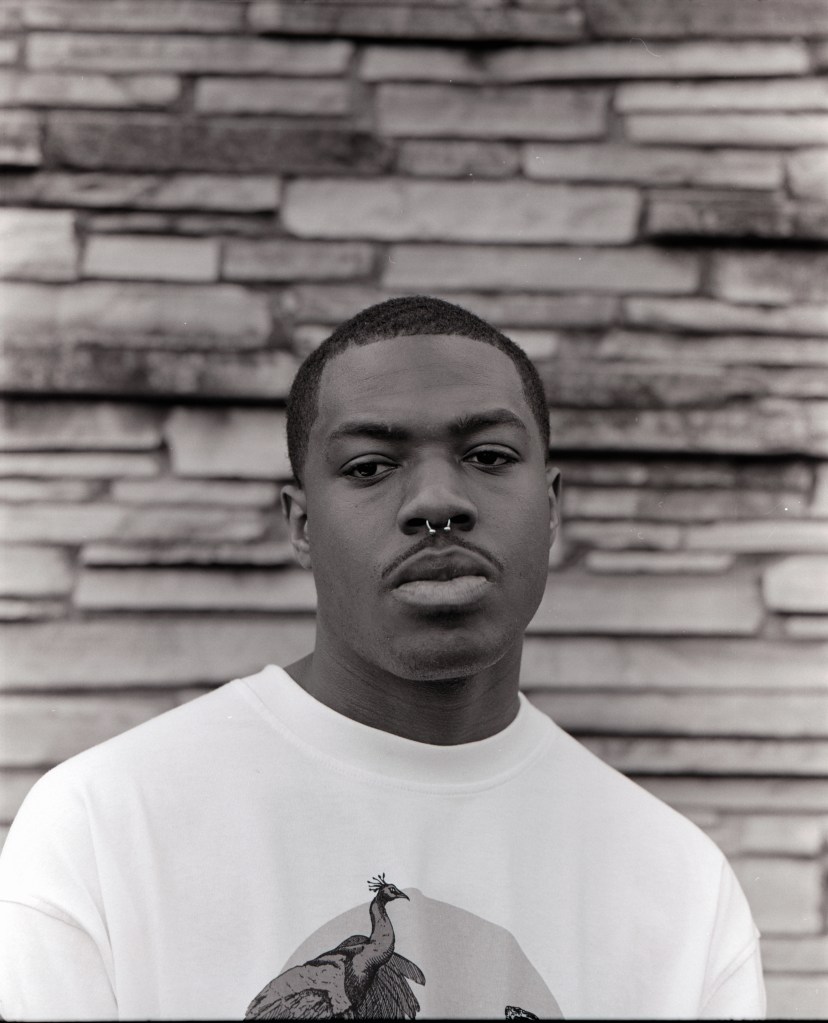
FF: What drives you to be so involved in your community in Dallas? Do you think it’s important to have that unity?
GM: Yes. It’s the stigma that I saw when I first got to Dallas. There was so much talk about, “Dallas not supporting Dallas” and I didn’t see that. It was a weird feeling to be excited about going to an event or being on stage and people still saying they didn’t feel like Dallas supported Dallas. I was like : “What are you talking about? I was on that stage and I felt that love.” It was a weird interpretation versus what the reality was. [The Waiting List] wanted to find that place where we could set the foothold and make any kind of music we wanted. We wanted to create a community where we could have people come in and do their thing and not feel constrained or combated. We wanted to make a community that was supportive.
FF: Where do you think that stigma comes from? The fans, or the artists?
GM: It’s the artists, I think. I think Dallas hasn’t tapped into its full potential as far as the [music] market goes. I’m talking about local artists. We haven’t figured out how to pull from every subsection of Dallas to support an individual or a group. We’re still learning how to do that right now, but I do think it’s because Dallas is so big. When you talk about all these major areas in Dallas, it’s like they don’t see each other when they’re so far away. Maybe they all live thirty minutes from every place. So, when we talk about collaborating and one person has an event one this side of the city and the other person has an event on another side of the city, they’re not going to see each other. That then comes off like there’s no love for one another and really what it takes, is to take that initiative to actually collaborate and come together to combat that stigma. That’s really all that it is; a miscommunication.
FF: With the music development in Dallas, do you feel like there’s a lot more room for growth? Or do you feel like Dallas is where it needs to be?
GM: I think– especially today– that Dallas is ready for that next step. We have artists that are ready to be on a tour, or to be an opener for someone big. When you talk about Coach Tev or Devy Stonez–there’s so many artists out [in Dallas] that are ready for that next level. I think we don’t have that infrastructure to support them yet. Other states understand that Texas has it’s own market that can be worked. Look at Sauce Walka, he is popular here [in Texas.] I didn’t know who he was when I was in California. He is a big name out here in Texas. Dallas needs to be able to utilize that and go to other cities with that same energy. I think when [Dallas] can get the legs to step into Atlanta, LA or Memphis and be able to tour, then we could have that money coming in to support the underground.
FF: I noticed you and Capshun work a lot together. Is that something you both agreed to do as far Capshun mixing and mastering your tracks?
GM: That’s how it’s been throughout our relationship. In 2018, that was when I started producing. Then it became me cooking something up and then bringing it to [Capshun] so he could finish up the product. There was no way I could do that myself and get that final, polished product. I want him to be that ear and be that “yes or no.”
FF: To wrap up this portion of the interview, I wanted to ask you about your taste in food. Did you have a favorite kind of food?
GM: I’m pretty picky. I think that it’s something that I don’t intentionally do but I do need to eat good all the time. If I’m going to eat, then it needs to be a good meal. I don’t want to venture too much outside of what it is I know I like. Because then, if I try something that is trash, that would mess up my whole experience. I don’t think I have a favorite food. If we talk about culture, I think my favorite to eat from is Thai. I’ve enjoyed most–if not all–Thai food that I have had. My favorite would probably be Yellow Curry. I will get Yellow Curry from any place. I also try to experience any type of flavor that I can to find the value in. There’s also this place in Dallas called Ida Claire, they take Southern-style dishes and add international ingredients. They get spices from, say, Kenya and put it on a Nashville hot fried chicken.
FF: Do you have a favorite thing that you like to cook?
GM: I would do a baked potato. I bake the potato, cut off the top, hollow it out and put bratwurst and bell pepper with jalapeño. Sometimes, swiss cheese or cheddar. I just like to stuff them and eat them like that. I can cook that in forty minutes and be out the door. It’s quick and easy.
FF: Do you have a least favorite food?
GM: I’m not a big fan of shellfish in general. I don’t get the hype. I’m not a fan of crawfish. I’m sorry.

Part 2: Capshun
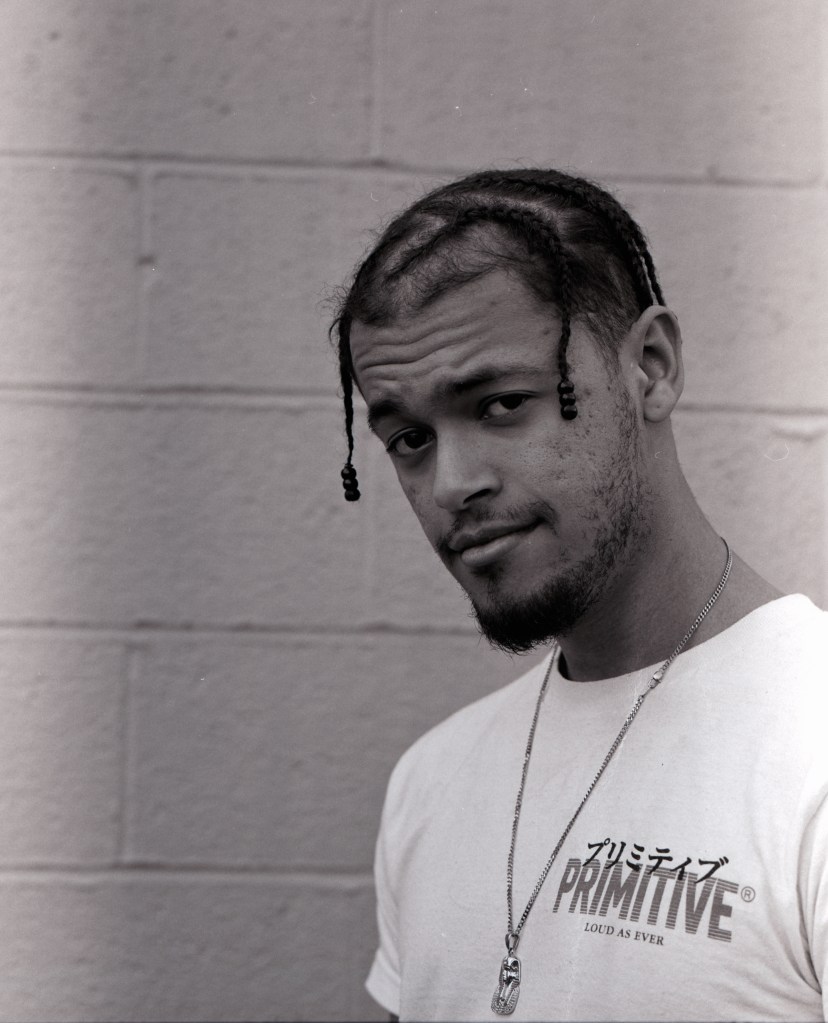
FF: Again, you started your career by helping produce tracks for your group in high school. Was there anything else that inspired you to want to start making music?
C: I started as a rapper. I saw everyone else rapping and was like: “I can be a rapper, too!” [I] found out I was not the greatest at that. I was just alright. I had a friend who was showing me Audiotool. I started digging into it and thought it was cool. [The group] needed a producer, anyways and I thought it was a necessity. It wasn’t until later on that I realized my whole background was in music. I sang at church when I was younger, my dad used to DJ and my mom used to sing.
FF: You were using Audiotool then, what are you using now?
C: I use FL Studio. I’m also pretty good with Ableton.
FF: You make Electronic Music. What drew you in to that genre? Was it something you resonated with? Or did someone introduce you to it?
C: Yeah, I realized I had been listening to Electronic Music ever since I started producing. I was listening to Mr. Carmack and other producers in that world before I even started making Electronic Music. They were making beats and it sounded cool when I heard it on the radio. It wasn’t until 2016 when I started developing my own sound and then realizing I had been listening to these Electronic artists since High School.
FF: You started only a couple of years ago but you’ve already built so many connections. You were featured on Clozee’s “Emergence” project and you opened for Electric Mantis, as well. How is it you’ve been able to connect with these big stars?
C: [Clozee] found me naturally. This had to have been last year when she followed me on SoundCloud and liked a track or two. We didn’t initially talk, then she reached out recently and mentioned she’d been listening to me for a while and wanted to get me on [Emergence.] Most of my connections has either been through me starting my record label, Bonsai, or me doing A&R work and tapping in through whoever I can. My manager also knows so many people and he does a really good job with connecting me.
FF: You’ve worked with Zayland, Coach Tev and of course, Graham Malice. Who else have you been able to work with since starting with production in general? Who would you like to work with in the future?
C: I’ve worked with–and this is artists just within the Electronic community–there are artists like Krane that I’m working with and also the artist, chromonicci, he’s blowing up. He’s working with Masego. In Dallas, I’m working with Devy [Stonez], P$O Kwama and all the other homies out there. People I want to work with inside the Electronic community include Mr. Carmack and a few others.
FF: With being an Electronic artist, have you had the opportunity to play at any big EDM festivals?
C: I got to play ILLfest in 2019 and I also played Daybreak, which is a festival out in Oklahoma that had just started in 2018. I got to play main stage, which was my first ever time being able to do that. It was really cool. That’s it for now but when [the pandemic] is over, I’ll be touring.
FF: Who else have you been able to open for?
C: Montell2099, Manila Killa, Luca Lush and the list goes on [laughs.]
FF: You have two record labels right now, Bonsai and Denali. Are those both Electronic labels?
C: Yes. With Bonsai, it’s more along the melodic side. I’ve tried to open that up more to lyrical music, as well. Whether that’s singing or rapping over an Electronic beat or not. I want it to be very open. With Denali, that’s trap, that’s that hype stuff you hear at the club.
FF: What drives someone to want to start a record label? And two of them, at that!
C: At first, it was very similar to why [Graham and I] started The Waiting List. Right before I started Bonsai, I was under a record label with a friend and that community treated me like trash. They weren’t supporting me and they wouldn’t release my music. So I was like: “Lets make our own thing!” and it just ramped up into something special. My mindset had switched and I saw what that did for myself. I wanted to be able to do that for other artists and give them opportunity and provide that knowledge to my community, as well.
FF: What goes into running a record label?
C: It’s a lot [laughs.] We have a solid team, multiple marketing folks and my manager also works on the team with us. We’re trying to put the pieces together with other labels and brands within the Electronic scene. With smaller artists, we check out their music and if it’s dope and we feel they deserve that shot, we give it to them. We put them on the platform and promote [the music] as hard as we can, because they deserve that.
FF: What’re your plans for the labels in the future?
C: Lots of really big things. Recently, we’ve been really tapping into a lot of things like Crypto. Also, with shows likely to be happening in the later parts of the year, we plan to do shows and also, festivals. We want to pick up more artists and give them more opportunities to work with other artists on a larger scale.
FF: Given your interest in Japanese culture and art, did that influence the name Bonsai at all?
C: I think at first, that was earlier in my career, so I wasn’t really thinking about that. I just thought it was cool. It didn’t feel so important and I knew I could mold it into something more. Then I realized later, that [the label] is like a bonsai tree, something that grows for thousands and thousands of years. It’s something that is passed down from generation to generation. I was like: “this is the same thing that I’m doing with this music. “
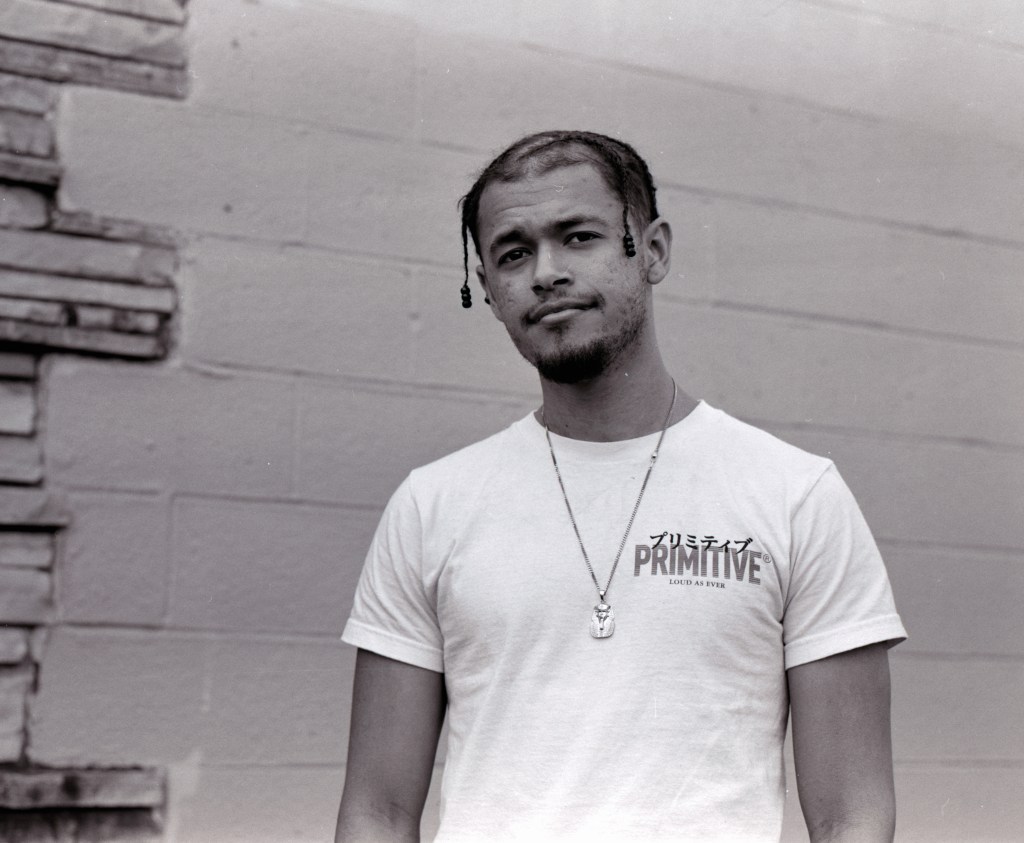
FF: Not only do you work in Electronic music, you have experience working with different sounds. What are some other examples of sounds you try to experiment with in your music?
C: Indie music, Lo-Fi, Hip-Hop. I want to do everything. When people think of Capshun, I don’t want them to have any idea what they’re going to hear next. They won’t know who I will be collaborating with, what the style will be or anything. They just need to know whatever it is, that it’s going to be fire. Whether it’s a chill track, or a Lo-Fi beat that you’re studying to; it’s going to be fire.
FF: Do you have any collabs coming up that you’re excited about?
C: I have a ton of collabs. My most recent one would be with Jon Casey, he’s based out of South Africa. He’s a trap legend coming up right now. I’ve got some stuff with COLSON XL, who is also from [Austin.] There’s a lot of tracks coming out with Bonsai, too.
FF: That’s all really amazing and I’m looking forward to the future that lies ahead from you. Before I wrap up this portion of the interview, could you tell me what your favorite place to eat would be and what your favorite dish is from there?
C: Definitely the Falafel Waffle Fry dish from New York Eats [in Arlington.]
Part 3: The Waiting List

FF: Let’s get into The Waiting List. You two had the idea about two years ago. Was The Waiting List what you originally wanted to call it? Or were there other potential names?
GM: We didn’t have a name originally. When we started the idea, we didn’t know what it was going to be or how we were going to go about releasing music. A lot of the stuff [Capshun] does with his labels is a test for what we do with The Waiting List. The structure in which scenes and labels work within the Electronic community is so different from other genres. [Capshun] can drop a single with another label; you can’t really do that with Rap, it doesn’t work that way. We wanted to bring that format over to the Rap space. It took a lot of work to make it make sense to people. We had to sit down and have sessions and tell people the idea. Eventually, because the sessions were so exclusive, word of mouth became the way for [The Waiting List] to spread. People would hit us up and ask about getting in on sessions. We were like: “Okay, well, we have a lot happening and there’s a line.” I think we were in a session and mentioned to an artist we had in the booth about people hitting us up, then they had said to us : “You got to put them on the waiting list!” We put that on the whiteboard and just went for it.
FF: That’s awesome! Tell me about the [studio] set up?
C: Well we do it out of our apartment. You walk in and there’s the kitchen to the left! [laughs] We got the actual studio set up in this really big living room, we have a TV on the wall, a projector and everything. Typically for sessions, we set up a booth in [Graham’s room] and an engineer space where people go an record tracks off of beats that I likely already made. My room is the booth itself.
FF: Are there plans on expanding the space to record in?
GM: When we were initially thinking of what we were going to do, that was the immediate thought. We knew we needed a space to make it all happen. For me, it was a roadblock I had put in front of myself for no reason. We were thinking of all the moving parts needed to make this happen and ultimately realized that we just had to do it ourselves. We were able to save money and be hands on with the process so that there weren’t any miscommunications. Yes, in the future, I want to do it in other spaces. But, I know I wouldn’t want to rent out a studio and do it that way.
FF: With what is being done with The Waiting List, how important does that feel for your community in Dallas?
GM: I think we are the first people to successfully approach infrastructure in Dallas in a way that is undeniably genuine. Everything we’ve done up until this point–and again, it’s only been two years and some months since we announced [The Waiting List]– songs that we’re dropping now are songs we were working on two years ago. The things we are dropping now are going to have a different face and people are going to realize the time and dedication we put in. The point is, we feel the Dallas scene has the best of any sub-genre you can think of. You can talk about Rap, Trap, and singer- songwriter music and Dallas has some of the best artists out. We’re taking that next step and there’s not really anyone pursuing the infrastructure required to support artists like that.
FF: Is The Waiting List exclusive? Is there a limit with how many artists your team works with?
C: We usually work with a maximum of ten artists per session. We limit it to that amount to be safe due to COVID.
GM: Before, it was fifteen. But before doing anything, we list everyone in the scene. It’s not really a collective because we meet new people and bring them in. Whenever we want to start sessions, we think of what sort of songs we want to make and what would sound good together and then hand pick artists. We’ve had dozens of artists come into our studio.
FF: Being that there is no active website to access The Waiting List, how is it people gain access?
GM: It’s word of mouth. We don’t do requests as of right now. It really comes down to having to know us. We’re nice people. As long as you can drop your ego before you walk through our doors, we will most likely be good. I think maybe one day there will be a website but I don’t see us setting up submissions. I also think The Waiting List will outgrow Capshun and I as individuals and we don’t want to get swamped with that.
C: That’s a whole other part about the idea of [The Waiting List.] Artists don’t have to fill out a form or pay their way in. Just be friends with us! Let’s make dope music; that’s really all it is.
GM: Yes, that’s a big thing the community is missing. The Waiting List is a dope platform but without The Waiting List the mentality needs to change with how people approach collaborations. If The Waiting List wasn’t doing it, we still need that mentality change. It’s about working with all those around you. It’s all about making sure you’re being a genuine person and everything so that I also can get that reciprocation.
FF: From a creative content standpoint, what are the plans for The Waiting List as a resource or as a brand?
GM: We’re shooting commercials for the page that showcase what we can do and what we can offer. Within the commercials are actors who are actually some of the artists we work with. We want to eventually pitch that to, say, Adult Swim. Put us between Robot Chicken and Family Guy; that’s the goal with those. The Waiting List is so malleable at this point, that we can do what we want.
FF: What can be expected from The Waiting List as far as music releases?
GM: We’re going to be dropping every month. It’s going to be collaborative efforts with us and other artists.
FF: There are future plans to expand The Waiting List outside of Dallas. How does the team envision that happening?
GM: With eventually expanding to Austin, that’s where The Waiting List would be based. I need to find people here that I am comfortable and confident with in curating similar sessions. Our sessions and how we handle them is super unique to us. It’s all about making those ties, strengthening them and getting to a point where we feel we can have those kind of sessions [in Austin.] Like I said, The Waiting List is going to outgrow us. Eventually, there will be “The Waiting List: Austin” and we’ll have events out here under the label. It’s goal for us that’s not too far off.
FF: I feel very grateful to have had the opportunity to talk to you both. There’s still so much room for expansion and so much more to plan. I do think it’s really important to let the world know about what The Waiting List is doing.
GM: Most definitely.
Check out Graham Malice on Spotify
Check out Capshun on Spotify:
Check out The Waiting List “BLOOMING” playlist on Spotify: https://open.spotify.com/playlist/2m6JkNw58iY9gzJvN4vYb7?si=JQ-QXFvCRYadybwKX7q1oA
Special thank you to Julian Smith, our photographer for this session.
 FNGR FOOD
Leave a reply to Jackie Cancel reply